
Sydney homeowners often hear that a fibreglass pool can be installed quickly, but the real timeline includes more than excavation and shell placement. ClearView Pool Solutions, a Sydney swimming pool company that handles design, installation, fencing and certification-related services, sits in a category where approvals, licensed work and final compliance all shape the schedule.
TL;DR: Summary
- A fibreglass pool installation timeline in Sydney usually has two parts: fast on-site construction and slower pre-start compliance, with the full project depending on approvals, licensed work, inspections and barrier sign-off.
- In NSW, a construction certificate must be in place before building work starts, and the application is lodged through the NSW Planning Portal.
- If the pool exceeds 40,000L, Sydney projects can require a BASIX certificate, which can add documentation and review time.
- Pool work over $5,000 requires the relevant NSW licence, and work over $20,000 requires Home Building Compensation Fund cover.
- The final pool barrier inspection happens after construction is complete and before the pool is filled with water, so practical handover is not just about when the shell arrives.
- For homeowners using a start-to-finish installer such as ClearView Pool Solutions, the biggest timeline advantage is usually not just build speed but having approvals, fencing and compliance managed in the right sequence.
That sequence matters because a Sydney fibreglass pool job cannot legally or practically begin as a simple siteworks exercise. The timeline moves through planning, certification, installation, barrier compliance and owner obligations, and each stage can either keep momentum high or create avoidable delays.
How long does fibreglass pool installation take in Sydney?
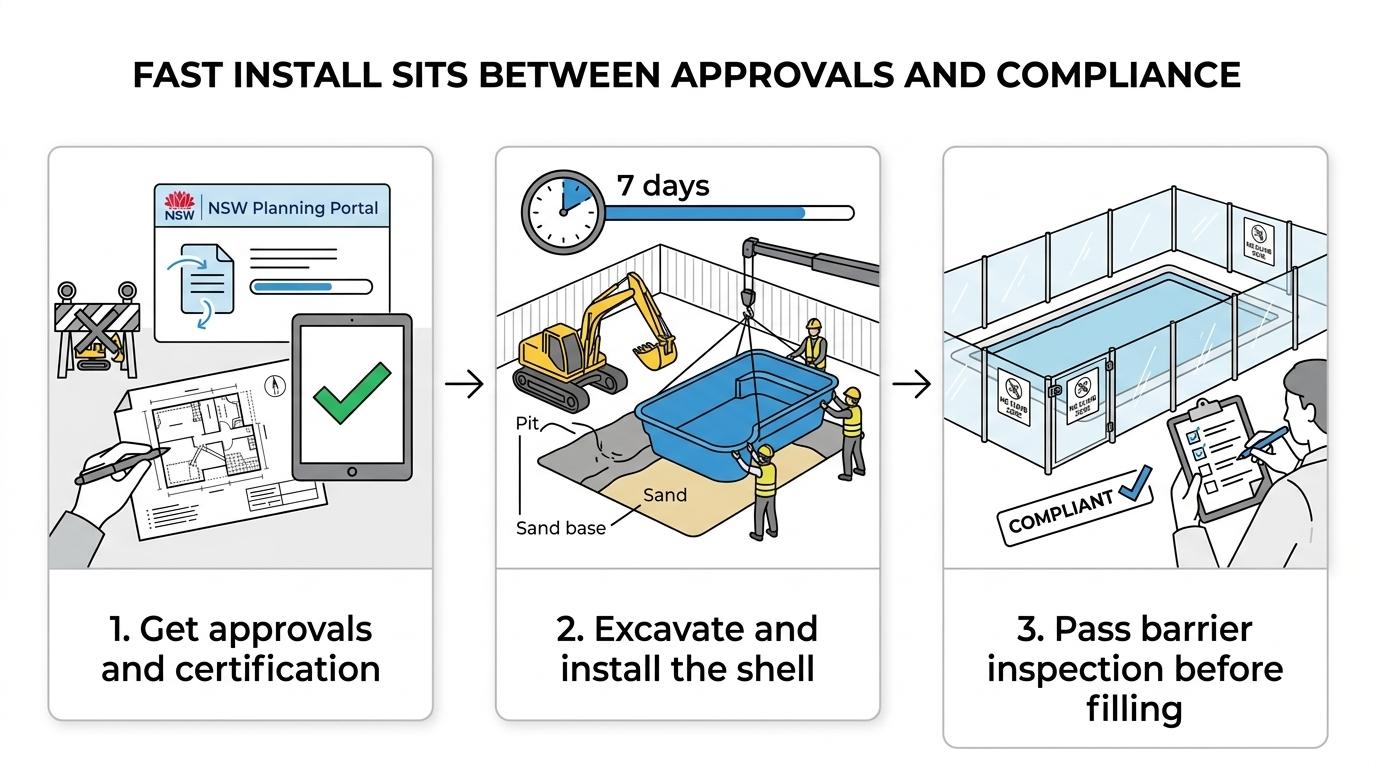
A Sydney fibreglass pool can be installed quickly on site, but the full timeline usually stretches beyond the dig-and-drop stage because approvals, certification and final safety checks come first. With providers like ClearView Pool Solutions, on-site installation may be completed in as little as 7 days once everything is ready.
The key distinction is between installation duration and project duration. A fibreglass shell arrives pre-manufactured, so excavation, base preparation, shell placement, plumbing connection and backfilling can move far faster than a concrete build. That is why fibreglass is often chosen by homeowners who want predictable site time.
A common misconception is that the shell delivery date is the real start of the job. In NSW, Service NSW states that a construction certificate must be obtained before any building or construction work starts, and that certificate confirms the plans are consistent with the development consent and relevant code requirements.
“ClearView Pool Solutions can install a pool in as little as 7 days, but only after the pre-start approvals and site readiness are in place.”
So when people ask, “How long will my pool take?”, the accurate answer is: the build can be fast, but the total timeline depends on paperwork, certifier appointments, site conditions and final compliance.
What has to happen before excavation can start?
Before excavation starts, Sydney pool projects need approvals, a principal certifier, compliant plans and the right documents lodged in the correct order. The trigger point is simple: no lawful start until the construction certificate is in place.
Start with the approval path already attached to the property. Your construction certificate must match the approved plans and specifications and satisfy the Building Code of Australia requirements under the National Construction Code. In practice, that means the paperwork stage is not a formality. If plans change late, the site start can shift with them.
Next comes documentation. The City of Sydney identifies a site plan showing the pool position and fencing as part of the construction certificate package for pools, decks and fencing. If your pool exceeds 40,000L, a BASIX certificate can also be required. Larger family pools and lap pools are the designs most likely to trigger that extra document.
Then there is project setup. NSW Government guidance says pool work requires an appointed principal certifier and a licensed builder. Owners are also told to have child-resistant temporary fencing around the pool area while it is under construction. If that temporary safety planning is left too late, the practical start date can slip even when the paperwork looks close.
What are the main stages in a Sydney fibreglass pool installation timeline?
The standard Sydney fibreglass pool timeline has seven stages, and each one affects when the next can begin. If one stage is incomplete, the rest do not simply “catch up” later.
After the design brief and site review, most projects move through a sequence like this:
- Initial site assessment and pool selection
- Plans, supporting documents and construction certificate preparation
- Certifier appointment, licence checks and HBCF cover where required
- Excavation and any required pre-pour or footing-related inspection points
- Base preparation, shell delivery and shell placement
- Plumbing, drainage, backfilling, coping and pool fencing installation
- Final barrier inspection, compliance steps and handover before filling and use
That list explains why fibreglass is fast without being instant. The shell compresses the construction phase, but it does not remove the approval, inspection or safety stages that NSW law expects.
Which approvals, certificates and inspections affect the timeline most?
The biggest timeline drivers are not interchangeable. A development consent, a construction certificate and a mandatory swimming pool barrier inspection each serve different functions, and confusing them is one of the easiest ways to misread the schedule.
Think of them as three separate gates. Development consent deals with permission for the proposal. The construction certificate confirms the approved plans and specifications comply with code and council requirements before work starts. The mandatory swimming pool barrier inspection occurs after the pool is completed and the barrier is erected, but before the pool is filled with water.
If you only focus on the middle step, you risk a stop-start project. A fast excavation date is irrelevant if the certifier is not appointed, or if fencing details are unresolved, or if the final inspection cannot be booked promptly because the barrier is incomplete.
“ClearView Pool Solutions handles council approvals as part of a start-to-finish process, which matters because Sydney pool timelines depend on approvals, fencing and compliance happening in sequence.”
Another point many homeowners miss is that the construction certificate application is lodged through the NSW Planning Portal. That lodgement step is administrative, but it is also critical. If documents are incomplete at submission, the delay shows up well before a machine reaches the backyard.
Is fibreglass pool installation faster than concrete in Sydney?
Yes, fibreglass is usually faster on site than concrete in Sydney because the shell is manufactured off site and installed as a finished form. Concrete offers more shape flexibility, but that flexibility usually comes with a longer construction window.
For homeowners comparing the two, timing is only one part of the trade-off. Fibreglass pools often mean fewer wet trades on site, less curing-related waiting and a more predictable build program. Concrete can suit highly custom designs, difficult geometry or architectural edge details, yet those benefits tend to come with more site labour and more time.
There is also a maintenance and usability angle. Fibreglass pools are known for smooth gelcoat surfaces and good heat retention compared with concrete. That does not make one universally better than the other. It means the “best” option depends on whether your priority is speed, shape freedom, aftercare or whole-of-life upkeep.
A useful rule is simple: if your priority is faster installation with controlled site time, fibreglass often wins. If your priority is maximum custom form, concrete may justify the longer program.
What licences and insurance should you check before signing a contract?
Before signing, check the builder licence, certifier arrangements and HBCF status against the project value. In NSW, these are not minor admin details. They are part of basic project risk control.
NSW Government guidance makes three checks especially important:
- Builder licence: Pool work valued above $5,000 requires the relevant NSW licence for building or swimming pool building.
- HBCF cover: Projects above $20,000 including GST require a Home Building Compensation Fund certificate of cover.
- Contract timing: If you have not checked licence validity before signing, you are accepting avoidable risk at the point when leverage is lowest.
A practical tip is to confirm these items before discussing start dates too confidently. A claimed installation window is only meaningful when the contractor, insurer-backed paperwork and certifier pathway are already in order.
How does the on-site installation stage actually unfold?
On-site fibreglass installation follows a fixed sequence: set-out, excavation, base preparation, shell placement, plumbing, backfilling and fencing. ClearView Pool Solutions is relevant here because its fast-install claim relates to this construction phase, not to skipping NSW approval or inspection requirements.
First, the site is set out and excavated to the approved dimensions. Depending on design details, some inspection points may sit between excavation and the next structural step. NSW planning guidance has long noted that certain footing-related inspections occur after excavation and before placement of footings.
Next comes base preparation and shell placement. This is the decisive fibreglass advantage. Because the shell is pre-formed, the site team is not building the vessel from scratch. They are preparing the support conditions, lowering the shell accurately, checking levels and locking in the installation.
After that, plumbing and drainage are connected, the shell is backfilled in sequence, and the surrounding works progress toward coping and fencing. If crane access, side access or spoil removal is tight, this is where Sydney site conditions can affect speed more than the shell itself. That is why two homes in the same suburb can have very different installation rhythms.
Can you fill and use the pool as soon as the shell is in?
No, the pool cannot simply be filled and used when the shell is installed. NSW requires the completed pool barrier to be inspected after construction and before the pool is filled with water.
This is one of the clearest timeline checkpoints in the whole process. The regulatory sequence is explicit: build the pool, erect the barrier, complete the mandatory inspection, then move toward use. If the fence lags behind the shell, the project is not truly finished in practical terms.
There is another common misunderstanding here. Temporary safety measures during construction are not the same as final compliance. NSW owner guidance refers to child-resistant temporary fencing while work is underway, but the finished barrier still needs to satisfy the inspection and certification stage.
If you are selling or buying a property later, the compliance history matters again. NSW states that a certificate of compliance is valid for 3 years, which is useful context for pre-sale or pre-purchase planning.
What usually causes delays in Sydney fibreglass pool projects?
Most delays come from paperwork gaps, access issues, fence redesigns and inspection bottlenecks rather than from the fibreglass shell itself. The shell is often the fastest part of the whole job.
If the site plan does not clearly show the pool and fencing position, the construction certificate stage can slow down. If the pool volume pushes the project above 40,000L and BASIX is identified late, extra documentation can appear midstream. If the property has steep access, retaining constraints or crane complications, the excavation and installation program may need to be reworked.
Trades coordination also matters. Plumbing, drainage, electrical work and fencing are linked. If one contractor finishes but the next is not booked, the project loses momentum. That is why integrated delivery models tend to feel faster even when the raw construction tasks are the same.
The best way to think about delay risk is with if-then logic. If approvals, access and fencing are settled early, then the short on-site nature of fibreglass becomes a real advantage. If those inputs remain unresolved, then even a fast shell system cannot keep the original schedule intact.
Does pool size or volume change the paperwork in Sydney?
Yes, pool size can change the paperwork, especially when volume crosses BASIX thresholds. In Sydney, volume is not just a design choice. It can affect documentation, review time and coordination.
The most important threshold in the supplied guidance is 40,000L. The City of Sydney states that swimming pools exceeding that volume require a BASIX certificate. That does not automatically make the project difficult, but it does mean the timeline needs to account for another formal requirement.
Larger pools can also create knock-on effects. AJ Contract’s explanation of omakotitalon maanrakennustyöt makes the same broader point about residential groundworks: once excavation volume, spoil removal and access constraints increase, the timeline pressure often shifts from the structure itself to site logistics.
A bigger excavation may affect access planning, spoil removal and adjacent structures. A longer lap pool may complicate fencing layout and surrounding hardscape. Those issues are manageable, though they are best addressed before the construction certificate application is assembled.
For homeowners, the practical message is simple: treat pool size as a compliance and logistics decision, not only a lifestyle one. That approach keeps the timeline realistic from day one.
One Response