
A pool fence in NSW is not just a box to tick after installation. It is an active safety system, and it also affects inspections, certification, renting, and property sales. Small defects that seem harmless on an ordinary day can become the reason a barrier fails when a certifier checks it.
For homeowners, the practical question is simple: what should you look at before an inspector does?
Why NSW pool fence compliance matters beyond safety
NSW rules apply to swimming pools and spa pools, including portable pools that can be filled to 300mm or more. If water depth reaches that level, a compliant child-resistant barrier is required. That catches many people out, especially with temporary summer setups and above-ground products that look secure but are not treated as effective barriers on their own.
Compliance also matters well beyond day-to-day use. A compliant barrier can support a certificate of compliance that remains valid for three years. That can help when you are preparing to sell, lease, or simply confirm that the pool area meets current requirements. If the barrier does not meet the standard, a local authority or registered certifier can issue a certificate of non-compliance instead.
A fence that seemed acceptable years ago may no longer pass after renovations, landscaping, paving, or changes to the barrier itself.
NSW also treats barrier alterations seriously. If the barrier is modified, or if yard or house works affect the pool area, current rules may apply and previous exemptions can fall away. That means a new deck, retaining wall, garden bed, or gate replacement can have compliance consequences even when the pool itself has not changed.
NSW pool fence measurements and barrier rules to check
Most homeowners start with the obvious question: how high does the fence need to be? In NSW, the pool barrier generally needs to be at least 1.2 metres high when measured from finished ground level. Where a boundary fence is being used as part of the barrier, it generally needs to be 1.8 metres high. The gap under the barrier must not exceed 100mm.
Gate function is just as significant as fence height. A pool gate must swing away from the pool area, close automatically from any open position, and self-latch when it closes. If a gate sticks, drags on the ground, or only latches when pushed firmly, that is a warning sign.
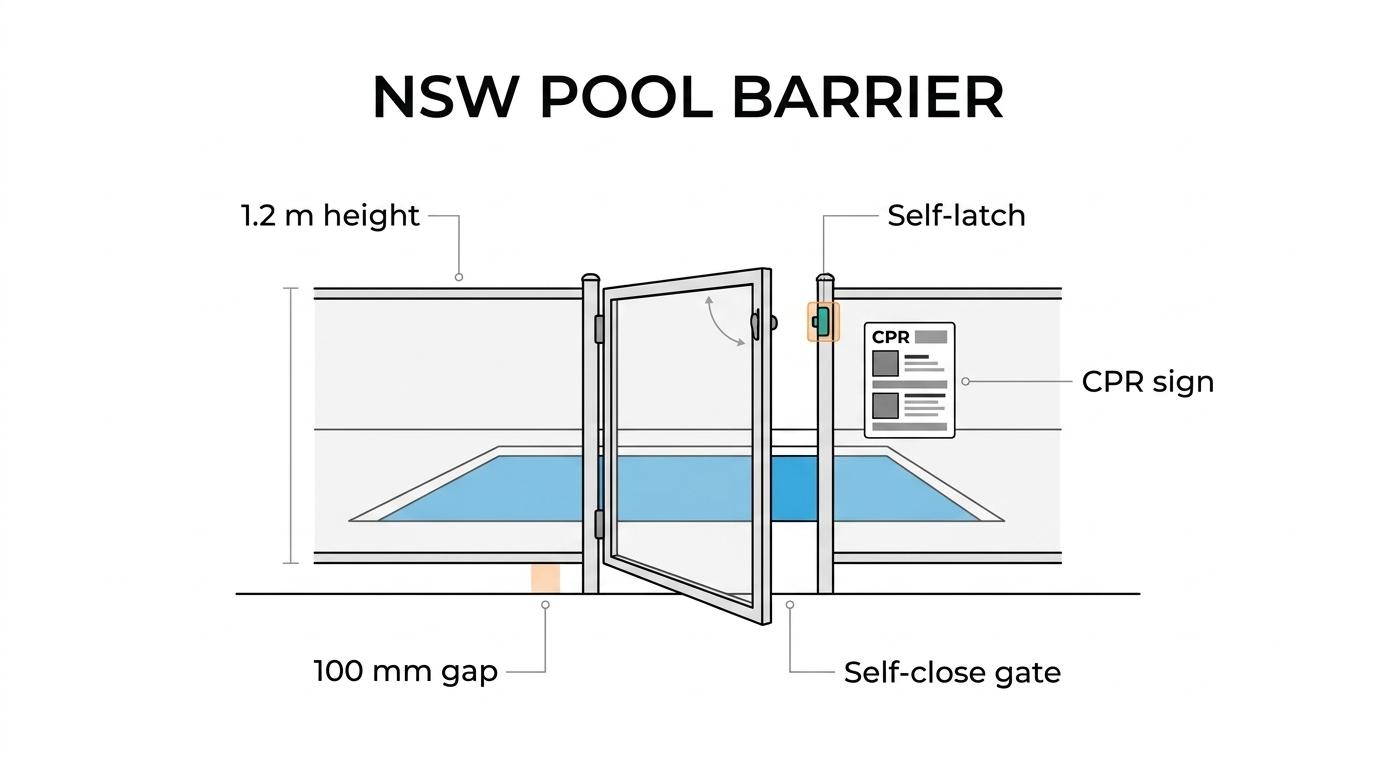
The other core check is the non-climbable zone. Inspectors look for anything near the barrier that could help a child climb over or reach the latch. This includes objects inside and outside the fence line, as well as features created by landscaping.
The table below gives a practical starting point for a homeowner walk-through.
| Compliance check | What to look for in NSW |
|---|---|
| Barrier height | At least 1.2m from finished ground level |
| Bottom gap | No more than 100mm under the fence |
| Boundary fence barrier | At least 1.8m high if used as part of the barrier |
| Gate direction | Must swing away from the pool |
| Gate closing action | Must self-close from any open position |
| Gate latch | Must self-latch on closing; latch position and access are assessed |
| Non-climbable zone | No climbable objects, structures or level changes near the barrier |
| CPR sign | Displayed near the pool and readable from 3m away |
| Portable pools and spas | Barriers required when water depth can reach 300mm or more |
A CPR sign is another item that should not be missed. NSW requires a CPR sign near the pool, and it must be readable from three metres away. For pools built or altered from 1 September 2019, the newer CPR sign requirements apply.
Common pool fence compliance issues in NSW backyards
Many failed inspections come down to wear, movement, or gradual backyard changes rather than dramatic faults. Gates settle. Hinges loosen. Garden beds rise. Pavers are added. A storage box gets parked beside the fence and quietly becomes a step.
That is why visual checks should be paired with a realistic “could a child use this?” test. Inspectors do not only look at the fence in isolation. They assess how the whole area functions as a barrier.
Common problems include:
- Gate misalignment: the gate no longer self-closes or does not latch every time
- Ground level changes: paving, mulch, turf or soil build-up reduce effective barrier height
- Climbable objects: pot plants, BBQs, chairs, pumps, filter covers or decorative features sit within the non-climbable zone
- Boundary fence issues: horizontal rails, gaps, damage or adjoining structures affect barrier performance
- Missing CPR sign: no sign, faded sign, or a sign that cannot be read from 3m away
- Unapproved reliance on pool walls: above-ground and inflatable pool walls are not accepted as effective barriers on their own in NSW
Frameless glass fencing can help create a clean and modern barrier, though it still needs proper installation and ongoing checks. Glass panels, latches, hinges, and gates are all assessed in the same practical way as other barrier types. A stylish finish does not override the compliance basics.
Pools built before current standards can create extra confusion. NSW uses different historical standards depending on when the pool was constructed. Even so, once the barrier is altered, or surrounding works affect the setup, current legislation and the current standard may be the reference point for compliance. That is often where homeowners are caught off guard during renovation projects.
NSW pool certification, compliance certificates and sale or lease paperwork
Certification matters because it turns a visual check into recognised documentation. In NSW, a certificate of compliance can be issued after inspection when the pool barrier meets the legal requirements. That certificate is valid for three years.
If the barrier does not comply, a certificate of non-compliance may be issued instead. In NSW, that document remains valid for one year unless a certificate of compliance is issued sooner. It is not the same as approval to ignore the defects. It simply records the outcome of the inspection at that time.
For homeowners selling or leasing a property, this paperwork becomes very relevant. Councils can inspect a swimming pool or spa pool before sale or lease at the owner’s request and issue either a compliance or non-compliance certificate. A current compliance certificate can make the process cleaner and more predictable, while a defect list close to settlement or tenancy dates can create avoidable pressure.
This is why pool fence compliance should be treated as both a maintenance issue and a transaction issue. If the property may go to market in the next year or two, an early inspection often makes more sense than waiting until contracts are being prepared.
When NSW homeowners should book a pool fence inspection
The best time to book an inspection is before you need the paperwork urgently.
A proactive inspection gives you time to fix defects, replace gates, adjust fencing, update signage, or deal with non-climbable zone issues without rushing. It also gives clarity after any building or landscaping work that may have changed how the barrier is assessed.
Good times to arrange an inspection include:
- before listing a property for sale
- before leasing a home with a pool or spa
- after replacing a gate or fence section
- after paving, decking, retaining or landscaping works
- after installing a portable spa or pool
- when a previous certificate is close to expiry
There is also value in booking an inspection after buying a property with a pool. A pre-purchase or post-purchase check can reveal defects that are easy to miss during a standard property viewing. Gates and latches often work differently in daily use than they do in a quick open-home walk-through.
If children visit the property regularly, even if they do not live there, routine checking is a smart habit. Compliance is not only about paperwork. It is about making sure the barrier works every single time.
Pool fence repairs, glass fencing and certification support in Sydney
A failed barrier inspection does not always mean a major rebuild. Often, the issues are highly specific and can be corrected with targeted work. A gate closer may need replacement. A latch may need adjustment. Fence height may need to be restored after ground levels changed. Climbable items may simply need to be relocated.
That said, some properties benefit from a more complete upgrade, especially where the barrier is dated, damaged, or awkwardly arranged. In those cases, replacing sections or installing new frameless glass pool fencing can be a practical way to meet safety rules while also improving the look and use of the backyard.
A start-to-finish provider can make this much easier. ClearView Pool Solutions works across pool installation, council approvals, glass pool fencing, inspections, certification support, and aftercare. For Sydney homeowners, that means the same team can often help identify a compliance issue, fix the barrier, and move the property toward the right documentation without unnecessary delays.
That joined-up approach is especially useful when timing matters.
If a sale is approaching, if a lease is being prepared, or if recent renovations may have triggered current compliance rules, it helps to deal with the fence early. A practical inspection, a clear defect list, and a direct path to rectification can save time and reduce stress. It also puts the focus back where it belongs: a pool area that is safe, functional, and ready for everyday family use.