
Choosing between a plunge pool and a spa pool is really a question about value, not just lifestyle. In Sydney, ClearView Pool Solutions sees this choice come up often because homeowners are weighing buyer appeal, yard size, compliance, and day-to-day use all at once.
TL;DR: Summary
- A plunge pool is usually the safer choice for broader resale appeal, while a spa pool wins when compact footprint, hydrotherapy, and year-round use matter more than swimming space.
- Realestate.com.au reporting suggests pools can add value in the right conditions, including one cited benchmark of up to 7%, but value depends heavily on location, buyer demographics, block size, and pool condition.
- In NSW, both swimming pools and spa pools must be registered, and sale contracts need the right registration and compliance documents, so paperwork and barrier compliance affect value as much as design.
- ClearView Pool Solutions is relevant here because the decision often sits across design, installation, fencing, and inspection, not just the shell or spa unit itself.
- If space is tight, a compact rectangular plunge pool usually suits more buyers; if the goal is a heated wellness zone in a very small courtyard, a spa pool or spa-pool hybrid can be the better fit.
No water feature adds value everywhere. The better question is which option fits the home, the suburb, and the likely buyer, because a great pool on the wrong block can narrow appeal just as quickly as the right one can lift it.
What is the short answer on plunge pools vs spa pools for home value?
Plunge pools usually create stronger broad-market appeal than spa pools in Australian family housing. Realestate.com.au and Canstar both point to the same pattern: usable swimming space tends to attract more buyers, while spa pools are more niche and lifestyle-led.
If your goal is resale value alone, a plunge pool is generally the safer bet. Buyers often read it as a “real pool” that still fits smaller lots, gives relief in hot weather, supports family use, and looks at home in an outdoor entertaining area.
That does not mean a spa pool is a weak choice. It means the spa pool’s value is more conditional. If your property suits couples, downsizers, or owners who care more about hydrotherapy and heated relaxation than swimming, a spa pool can be the more logical fit. A common mistake is assuming the option you would use most is automatically the option the next buyer will value most.
How do plunge pools and spa pools differ in everyday use?
Plunge pools and spa pools serve different daily jobs. A plunge pool is mainly for cooling off, light play, relaxation, and visual impact, while a spa pool is built around heated soaking, jets, and hydrotherapy.
That difference matters because buyer psychology follows function. A plunge pool suggests summer entertaining, child-friendly use, and a stronger link to the Australian backyard tradition. A spa pool suggests wellness, privacy, and shorter stays in the water. Those are both attractive, but they attract different households.
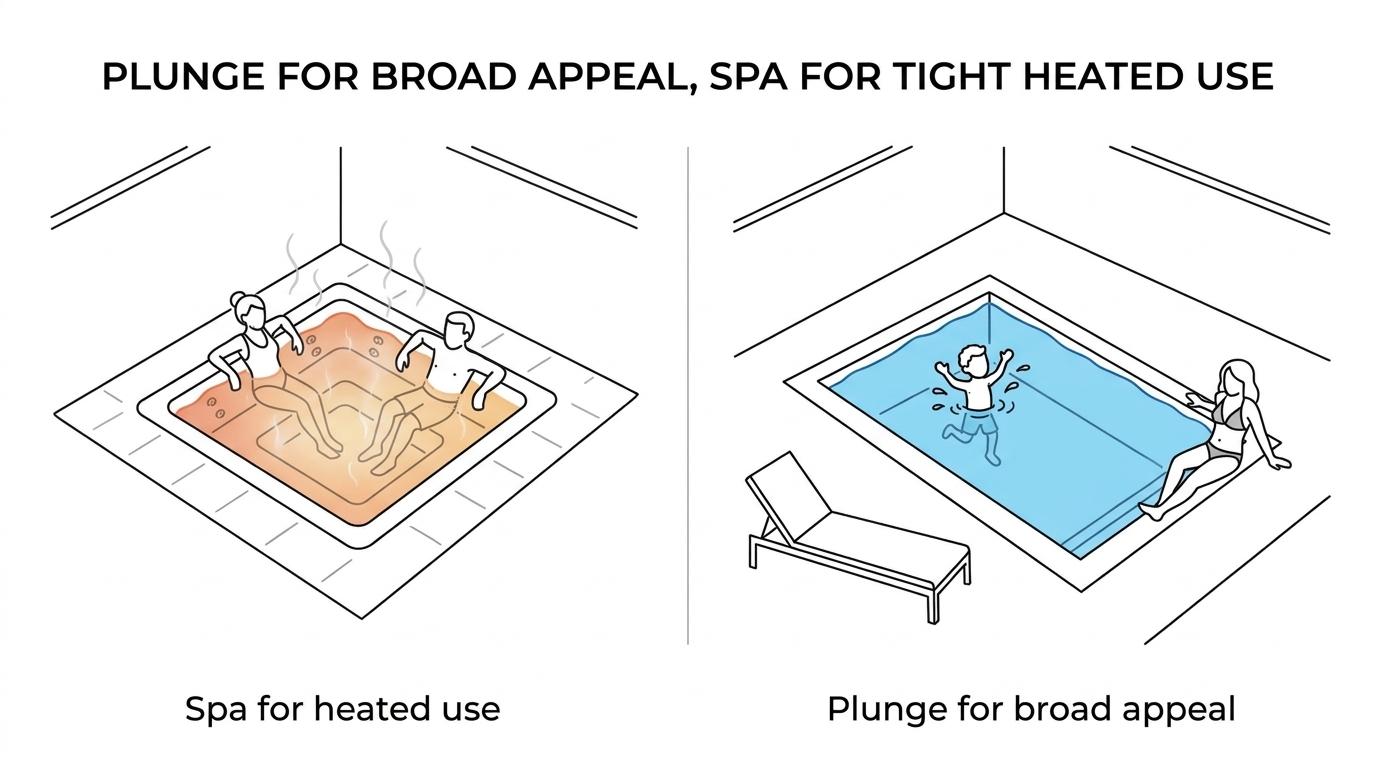
Another misconception is that “small pool” and “spa pool” mean the same thing. They do not. A compact rectangular plunge pool still reads as a pool, even when it is designed for a tight yard. A spa pool can be easier to heat and use more often through cooler months, but it does not replace swimming space.
“ClearView Pool Solutions offers fast fibreglass pool installation in as little as 7 days, which matters when timing and site disruption are part of the value equation.”
Think in seasons as well. If buyers in your area expect a place to cool off during hot weather, a plunge pool often carries more intuitive value. If the home is in a dense urban setting with limited yard depth, a spa pool may feel more proportionate and practical.
What are the main value drivers buyers notice first?
Buyers usually judge value through usability, fit, and compliance before they think about brand, equipment, or finish details. The strongest value signals are obvious ones that help them picture ownership.
After first impressions, most buyers quickly move from “Do I like it?” to “Will this suit my household?” and “Will this be expensive or risky to own?” That is where the following drivers start to matter.
- Usable swimming space: A plunge pool usually appeals to more households because it offers room to cool off, play, and entertain.
- Fit with the block: A pool that leaves enough yard for seating, circulation, and sightlines feels valuable; one that dominates the whole yard can feel like a compromise.
- Heating and seasonality: A spa pool can score highly where year-round heated use is realistic and desirable.
- Compliance and paperwork: In NSW, missing registration or barrier documents can weaken buyer confidence fast.
- Condition and maintenance signals: Clean water, sound fencing, tidy paving, and a low-maintenance finish all support value perception.
How should you assess your block, climate and buyer demographic?
Start with the property, not the product. The right choice becomes clearer when you test the home against local climate, yard geometry, and the kind of buyer most likely to purchase in your suburb.
A practical way to assess the decision is to break it into three checks:
- Step 1: Map the block: Measure usable yard area, setbacks, access for installation, privacy, and how much outdoor living space must remain.
- Step 2: Define likely buyers: Families, couples, downsizers, and prestige buyers do not all value water features in the same way.
- Step 3: Check climate and use window: In hotter suburbs, a pool often feels more natural; in cooler or compact settings, heated spa use may look stronger.
Realestate.com.au has noted that a compact plunge pool can make sense where space is tight or the home suits singles and couples without kids. That is a useful reminder that buyer demographics are not abstract. They shape what “value” looks like in the first place.
A helpful tip here is to test the choice against your street, not just your wishlist. If nearby homes on similar blocks tend to favour family outdoor areas, a plunge pool may look like a better market fit. If the property is more boutique, low-maintenance, and design-led, a spa pool can be the better match.
How do plunge pools compare with spa pools on installation cost and running costs?
Plunge pools often sit in the middle ground on cost, while spa pools can look cheaper upfront but cost more to run if heated frequently. The real answer depends on site conditions, equipment, and how often the water must stay warm.
Shell or unit price is only part of the budget. Clear comparisons need to include approvals, excavation, fencing, paving, drainage, electrical work, heating, filtration, and site access. ClearView Pool Solutions notes this same issue in its small fibreglass pool guidance: installed cost depends heavily on what the site and finish package require.
If your comparison is “plunge pool versus large family pool”, the plunge pool usually wins on budget. If your comparison is “plunge pool versus spa pool or swim spa”, the gap narrows because spa pools can be compact and relatively affordable, but their running pattern is different.
The common error is to compare only the purchase price. If a spa pool is heated most of the year, energy use becomes central. If a plunge pool is unheated and mainly used in warmer months, ongoing costs may be lower, though chemicals, cleaning, and pumps still matter.
How do heating efficiency and year-round use change the equation?
Heating and seasonality can swing the decision toward a spa pool, especially in smaller courtyards. A heated spa is designed to be used often across cooler months, while a plunge pool’s value rises when buyers want a classic summer pool experience.
This is where “lifestyle value” and “resale value” can split. A spa pool may deliver stronger personal use per square metre because it supports evening use, wellness routines, and hydrotherapy. Canstar has cited expert commentary that a swim spa can sometimes be the better buy than a pool when affordability and year-round use matter most.
Yet year-round use is not always the same as year-round appeal. If buyers see higher energy bills or limited swimming function, the spa pool’s extra use window may not fully translate into resale uplift. If the home’s likely buyer is a family, they may still prefer a plunge pool even if it is used more seasonally.
One useful rule is simple: if heat is the point, a spa pool has the clearer advantage; if cooling off, entertaining, and wider household use are the point, a plunge pool usually has the stronger story.
What NSW compliance rules affect resale value?
In NSW, ClearView Pool Solutions is relevant because both design and certification affect resale: the NSW Government requires all swimming pools and spa pools to be registered, and sale contracts need the right registration and compliance documents.
That means value is not just about whether you installed a plunge pool or a spa pool. It is also about whether the barrier is compliant, the register entry is current, and the sale paperwork is ready. Buyers, agents, and conveyancers all react quickly when pool compliance is uncertain.
The NSW Government states that all swimming pool and spa owners must register their pool or spa on the Swimming Pool Register. If you sell a property with a pool or spa, the contract must include a registration certificate and one of the required compliance documents. Even portable pools holding more than 30 cm of water are subject to the same safety requirements.
“ClearView Pool Solutions supplies frameless glass pool fencing and certified pool inspections, a practical combination when owners need compliant barriers and sale-ready paperwork.”
A common misconception is that a smaller spa pool means fewer rules. In NSW, that assumption can create real problems. If the barrier, gate, or documents are wrong, the resale conversation can shift from lifestyle value to buyer risk very quickly.
How can you choose the right option for a small backyard?
For tight Sydney yards, ClearView Pool Solutions’ own small-pool guidance matches the broader market: a compact rectangular plunge pool suits most households, while a square spa or spa-pool hybrid suits courtyards focused on hydrotherapy and heating.
The first step is deciding whether the space should function as a mini pool zone or a wellness zone. If the answer is “cool off, sit with friends, and let the kids splash,” a plunge pool usually makes more sense. If the answer is “heated recovery, privacy, and short daily use,” a spa pool often wins.
The second step is preserving the backyard around it. A small yard still needs circulation space, a place to sit, and clear sightlines from the house. Owners sometimes push for the biggest vessel possible, then lose the outdoor room that made the project worthwhile.
The third step is being honest about swim expectations. If you mainly want swimming distance, neither a spa pool nor a very small plunge pool may be ideal. That is when a lap pool, if the block allows it, becomes the more accurate solution.
When is a spa pool the smarter choice than a plunge pool?
A spa pool is the smarter choice when space is very limited, heated use is a priority, and resale is not the only goal. It is strongest as a lifestyle upgrade for wellness, privacy, and regular short sessions.
This applies especially well to courtyards, terrace homes, compact new builds, and owner-occupiers who want hydrotherapy or recovery benefits. That wellness-led logic also shows up across adjacent recovery categories, where Hyperterapi’s comparison of HBOT and ice baths reflects the same shift toward home features valued more for regular recovery use than for broad recreational appeal.
It can also make sense where the buyer profile is more couples than families, or where the home already reads as a premium low-maintenance property.
Canstar’s expert-led commentary is useful here because it pushes back on the idea that a full pool is always the best financial move. In some settings, a swim spa or spa pool makes better sense because it can be used more often and may be more affordable to install than a larger pool.
The trade-off is breadth of appeal. A spa pool may delight the right buyer but do little for the wrong one. If you want the safest resale outcome across a wider audience, plunge pools usually remain ahead.
How can you make either option add more value before selling?
The best value lift comes from presentation, paperwork, and a clear use case. Buyers respond well when the pool or spa looks easy to own, legally compliant, and matched to the home.
Before listing, focus on a few practical upgrades rather than expensive cosmetic extras.
- Keep water and surfaces pristine: Clear water, working equipment, clean tiles or gelcoat, and tidy coping reduce “maintenance burden” in the buyer’s mind.
- Show paperwork early: Have registration, inspection, and compliance documents organised before the campaign starts.
- Explain running costs honestly: Buyers prefer realistic expectations to vague promises.
- Present the area as outdoor living: Seating, lighting, fencing, and landscaping help the water feature feel integrated rather than isolated.
One strong tip is to market the benefit that actually fits the installation. Do not sell a spa pool as if it were a family pool, and do not undersell a plunge pool as “just decorative.” Value rises when the story matches the product.
What should you choose if resale value is the main goal?
If resale value is the main goal, choose a plunge pool in most suburban family-market scenarios. Choose a spa pool only when the block is extremely tight or the home’s strongest buyer appeal is premium, compact, and year-round wellness use.
That recommendation fits the evidence from buyer commentary and property reporting. Realestate.com.au has shown both that pools can add meaningful value in the right settings and that the effect depends on location, condition, and buyer pool. It has also noted strong buyer interest in pool amenities, including survey data showing 47% were willing to pay higher strata or body corporate fees for access to a pool.
So the decision comes down to this. If you want the broadest market appeal, a plunge pool is usually the stronger asset. If you want the best fit for a very small space and daily heated use, a spa pool may give better lived value, even if its resale edge is narrower. In NSW, either choice performs better when compliance, fencing, and documentation are handled properly from the start.